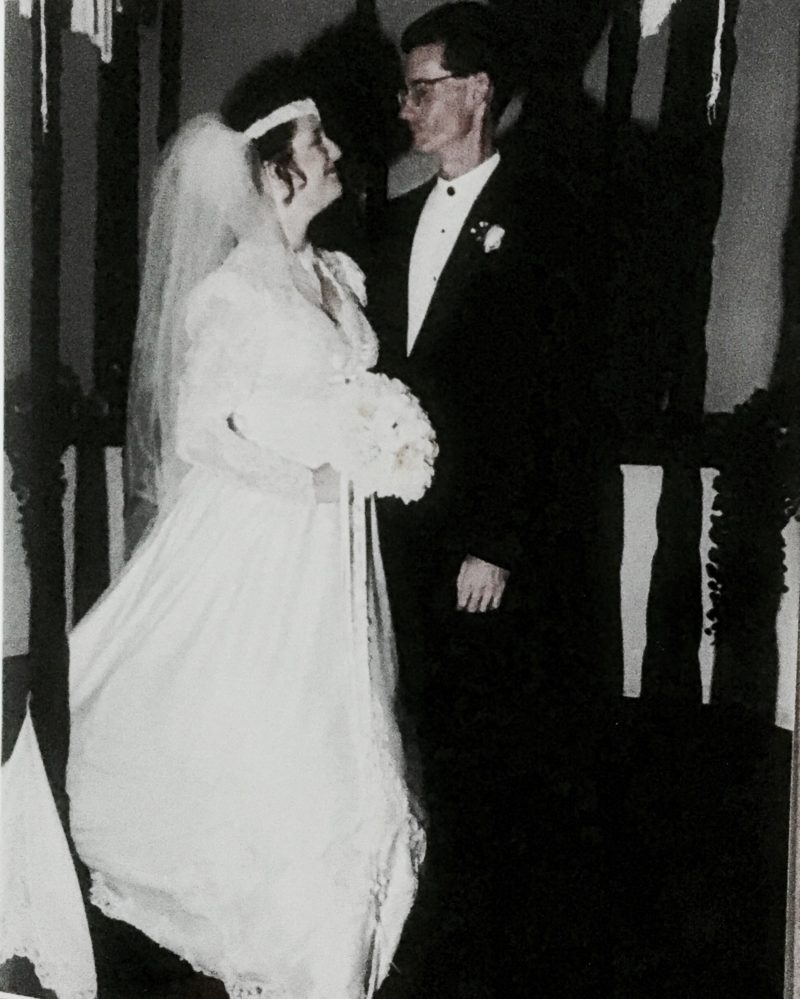
I’m often asked what it takes for someone to be married according to the Bible and one of the things that I try to point out is that there are certain things that are presented that are cultural and there are some things that are presented as being required by God’s instruction. There are also things presented in Scripture that are not how God would have us do things, or are cultural for non-Jewish cultures.
Let me share a few things that are part of the Jewish wedding in Scripture.
-
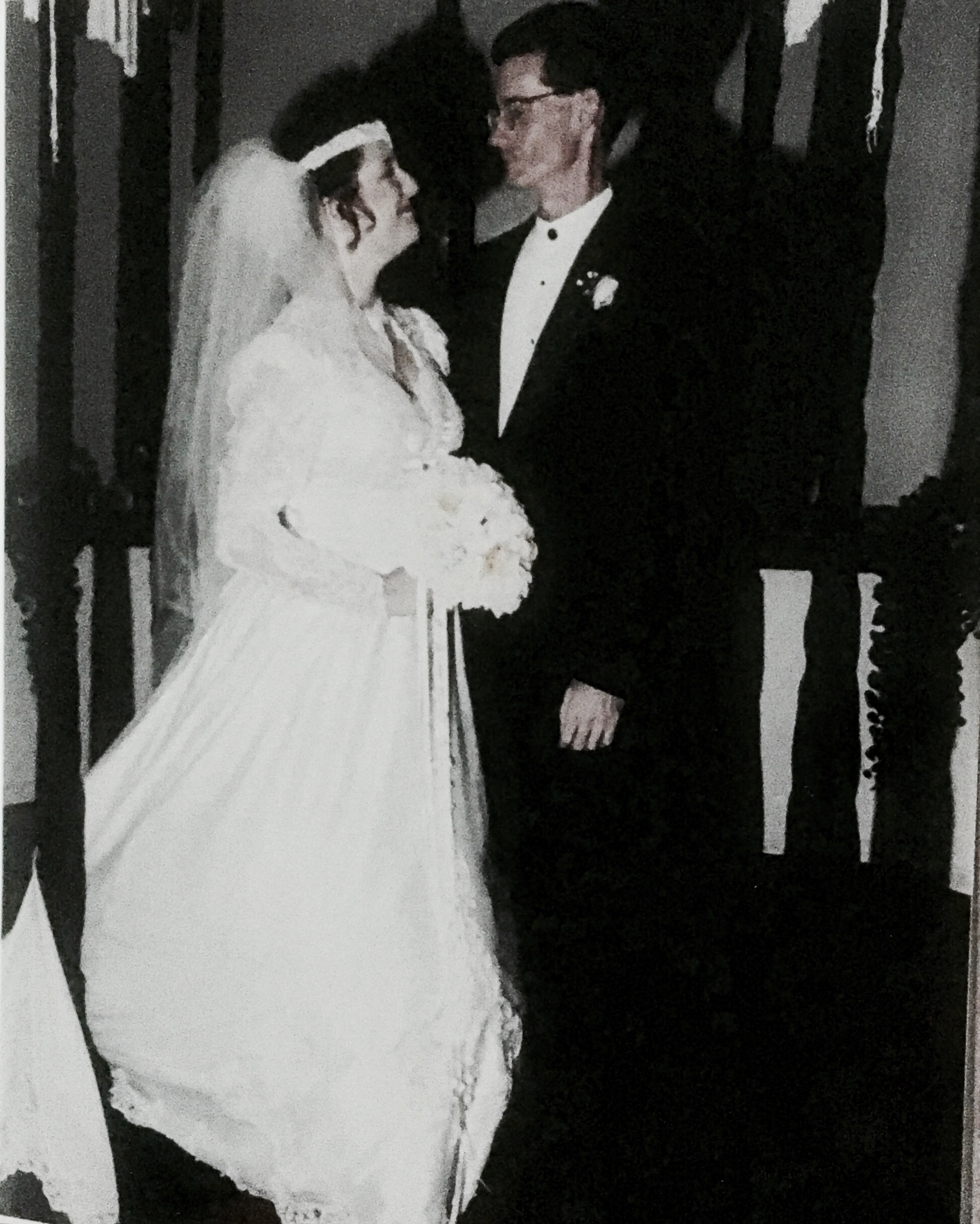
Married under the chuppah
The first marriage in the Bible is found in Genesis 2:24, “24 For this reason a man shall leave his father and his mother, and be joined to his wife; and they shall become one flesh. 25 And the man and his wife were both naked and were not ashamed.”
This is interesting because the couple was expected to live with the husband’s family. One suggestion is that this is intended as a reminder to a man who is still living around his family that his wife is supposed to be put ahead of his family in his life - which is an important distinction considering that he is also expected to respect his elders. That would mean this also serves as a reminder to his family of what importance his wife is supposed to have in his life so that they wouldn’t overstep their boundaries.
From early on there is a distinction made between married and sex outside of marriage. The relationship of being joined to his wife is expressed as becoming echad - the same word used of God when God is described as being One. The relationship between husband and wife is, according to Paul in Ephesians 5, the mystery of being a picture to the world of the relationship between Messiah and the Church, the Bride. The bride and groom give themselves to each other - they become one.
Paul discusses this in 1 Corinthians 7:4 when he speaks of not depriving one another and says, “The wife does not have authority over her own body, but the husband does; and likewise also the husband does not have authority over his own body, but the wife does.” They have authority over one another’s bodies because they have given themselves to each other.
This is a distinction
This is a distinction from prostitution where the man does not give himself to the woman and the woman only leases herself to the man. This is a distinction from fornication where two people have sex without giving themselves to each other. This is a distinction from rape where one person dominates and overpowers the other and steals from them.This is a distinction from adultery where you present to someone what you have already given to another. This is also a distinction from unions that involve two people who have not given themselves to each other even though they might have exchanged rings and vows.
This is why marriage is official when it is consummated. The wedding feasts in Israel in Biblical times were week long parties for the town while the new couple would go into a tent and consummate the relationship. The witnesses were the people who would stand listening outside the tent until they heard the sexual union of the newly married couple.
We encounter this in Genesis 24:67 tells us of the marriage of Isaac and Rebekah. After his father’s servant told Isaac the story of all he had done to bring back Rebekah, including the details of her character and the reasons he chose her, “Then Isaac brought her into his mother Sarah’s tent, and he took Rebekah, and she became his wife, and he loved her; thus Isaac was comforted after his mother’s death.”
According to Talmud, a woman becomes a wife through sexual intercourse, a contract, and the exchange of money. Only one is necessary, but all three are usually involved. All three of these things indicate the rights of a woman in marriage in Ancient Israel.
We encounter one of these rights when we learn the story of Tamar, Judah’s daughter in law. Her husband dies without her being given a child. Her husband was evil and God had taken his life, so Judah sent his brother Onan in to Tamar to do his duty for his brother and give her a child. When Onan spilled his seed he was refusing to give Tamar the child she was entitled to. This is support for the Jewish belief that sex was the right of a woman within marriage. This is a huge thing to realize, especially in the modern Western world where sex is often believed to be the right of men. In Ancient Israel women ere the ones who had the right to sex and the children who came from them.
The woman who was married according to Ancient Jewish practice was also entitled to food and clothing. The provision of these things things - food, clothing and sex - are explicitly stated in Exodus 21:10. They were, and continue to be, outlined, among other things negotiated on behalf of the bride, in a ketubah - a marriage contract. The ketubah might include what the woman would be given in the case of a divorce, or additional provisions for within the marriage. It was negotiated on her behalf, but the Talmud is strict that a woman would not be forced to marry without her consent. She has the final say in whether a union takes place.
There is much read into the discussions of the bride price and the dowry and often this is spoken of as the wife being purchased or sold. This is not accurate and is an unfortunate misunderstanding.
the dowry and the bride price belonged to the bride
Rather, while the man was expected to give the bride’s family gifts that would indicate his ability and willingness to provide for their daughter, the dowry and the bride price belonged to the bride. They were hers to bring into the marriage and she had the right to determine what was done with them. If the man proved unfaithful or put her out this money would provide for her.
The amount of money that a woman was worth would be determined by many things. One is, of course, how much the man loved her and wanted to be with her. Other factors would be considered as well including, but not at all limited to, the woman’s virginity. One reason for this is, going back to our story of Adam and Eve and the first wedding, husband and wife were giving themselves to one another. Where there is question of whether the woman is free to give herself to the man, there is question of how much the marriage is worth. This is not the same as saying that a woman without her virginity is devalued - rather, a woman with her virginity does not have her ability to give herself to her husband under any question.
We see this in a few Biblical examples.
In Exodus 22:16-17 we read, “If a man seduces a virgin who is not engaged, and lies with her, he must pay a dowry for her to be his wife,” and in the following verse, even if her father refuses to allow the marriage, the man is obligated to pay her the bride price for a virgin. In other words, her sex with him does not devalue her when she gave herself to him in love and with trust in his seduction.
Deuteronomy 22:28-29 is also often misunderstood as speaking of forcing a young woman to marry her rapist. Rather, it is an expansion on Exodus 22:16-17 and explains that even if the man’s intention is to manipulate her into sexual relations, once this is learned he is obligated to offer the virgin bride price and if the father consents to the marriage (and, as mentioned above if the woman agrees to the marriage) then the man is not only responsible for all of the rights she has in marriage, but he can never put her out. I have often explained it this way . . . if a man shows lack of judgment and impulse control in manipulating a young woman with promises and seductions without first marrying her then after marriage she was protected from him again showing such lack of judgment and impulse control and attempting to put her out.
Deuteronomy 22:13-21 is another passage that speaks of a woman’s virginity and suggests that a man who marries a woman and accuses her of not being a virgin can have her executed. This is far too simplistic a reading and is another one of the passages that sent me in search of some historical context for understanding. After reading how this passage was understood and applied by those to whom it was given I found it much less problematic.
First, at this time in Jewish history the wedding was typically broken into two distinct events, approximately a year apart. In the first part the couple would exchange the contract and money would be given to the bride. Then the husband would return to his home to prepare a place for them to live. He would return to her, and in the second part they would have sexual relations and then live together and return to the home had made for her. This passage addresses a woman accused of having committed adultery during that year - after she was married, but before they were living together.
Now, if the woman was not a virgin and she revealed this to her husband before the wedding then there was nothing to be done. There was no misrepresentation of herself to him and there was nothing he could claim regarding having been defrauded.
In order for the husband to make the accusation spoken of in this passage, he would need to have actual proof that she had slept with someone else during that year. There would need to be witnesses and a court hearing would be held to examine the evidence he was bringing. If it was found that she was not a virgin but he could not prove adultery then she would not be put to death. The man could, however, divorce her based on misrepresentation at the time he signed the ketubah and she would not be entitled to any promises granted her in case of divorce in that contract.
If, however, the family could provide proof of her virginity then there was nothing done to the woman and the man was held accountable and had to make compensation to the bride and her family.
I really love how the Chumash translation from the Hebrew reads, and I believe it expresses the understanding of what was really being addressed by this passage:
If a man marries a wife, and comes to her and hates her, and he makes a wanton accusation against her, spreading a bad name against her, and he said, “I married this woman, and I cam near to her and I did not find signs of virginity on her.” (Exodus 22:13-14)
In this case the family is able to offer proof and she is vindicated.
If, however, the man brings these charges because they are true, then she was given as a virgin but committed adultery while waiting for her husband to return for her.
There is caution to both the man and the woman in this passage.
There is caution to both the man and the woman in this passage. The woman receives a clear caution against committing adultery during that time and the man receives a clear caution against making such an accusation with anything less than proof that his accusation is true. In either case it is not her lack of virginity that is the issue, it is whether he was defrauded by the family or she had actually committed adultery. Both are legitimate concerns when entering a marriage.
One distinction made in Scripture that can sometimes be confusing for people is the distinction between a wife and a concubine. Typically a wife for a Jewish man was also Jewish and was protected by Jewish law and custom while in the marriage, and if the marriage ended. A concubine was typically a non-Jewish woman who had the rights of a Jewish wife while married, but if the marriage ended or she left the husband then her rights did not continue. If she became Jewish while married, however, she would be protected according to Jewish law in the case of a divorce, though she would not likely have a ketubah outlining her rights or specific provision for her.
he was not allowed to abuse her in any way.
There are also additional rights that women have had in marriage in Jewish culture that are not necessarily outlined specifically in Scripture, but that were understood to be obvious expectations of those who claim to worship God. Not only was a man prohibited from forcing sex on his wife (as it was her right and not his) but he was not allowed to abuse her in any way.
By no means is this an exhaustive discussion of the traditions and practices surrounding Jewish weddings, and there are many rituals that developed as part of it that are beautiful and meaningful in many ways. I hope that this has provided an introduction and some cultural context not always obvious in the text for those who are interested in this subject.


Speak Your Mind